Theme: Application of African Philosophical and Religious Thought in Addressing Contemporary Issues in Africa

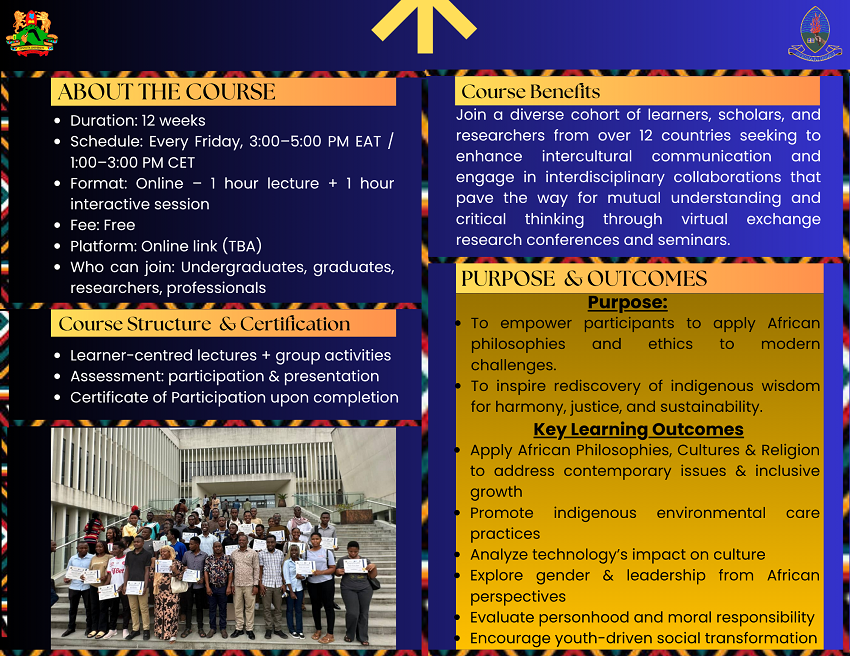
The course seeks to empower participants to understand and apply indigenous African philosophies, values, and ethical systems as viable frameworks for addressing modern societal, environmental, and technological challenges. It seeks to inspire a rediscovery and reimagining of African wisdom traditions to promote social harmony, justice, sustainability, gender equity, and community-driven development. Ultimately, the course provides a holistic understanding of how indigenous African cultures, traditions, and philosophies continue to shape identity, moral thought, and sustainable living across the continent.
Course Description
Indigenous African values, beliefs, and philosophical systems as alternatives solutions to contemporary challenges in Africa; African ethical principles, such as forgiveness, reconciliation, and hospitality, and their application to issues such as crime, immigration, and social integration; Ujamaa and Ubuntu philosophies as models for inclusive human development in Africa; African ethical frameworks, including the Vital Force Theory, Ukama, and Eco-Ethics, and their relevance to ecological and environmental concerns; The influence of African languages and naming systems on identity, morality, and social cohesion; Moral considerations of personhood and the sanctity of human life. Ethical issues associated with emerging technologies in relation to African traditions and philosophy; Gender roles, leadership, governance, and social justice within African contexts; Evolving role of African youth in preserving and transforming African traditions and philosophies.
Expected Learning Outcomes
By the end of this course, participants will be able to:
1. Examine how African ethical values could be applied to address crime and immigration issues.
2. Explore the contribution of Ujamaa and Ubuntu in redesigning human development models.
3. Analyze African perspectives on environmental stewardship and propose African ethical solutions to the ecological crisis.
4. Assess how African languages shape individual and collective identities, social cohesion, integration, and development.
5. Investigate the impact of emerging technologies and ideas on indigenous African ways of life and governance systems.
6. Critically examine how gender roles and identities influence social justice within African cultures.
7. Evaluate how indigenous African leadership models and political philosophies can inform or influence contemporary political and governance systems.
8. Assess the moral considerations surrounding personhood and the sanctity of human life.
9. Analyze the role of Religion in conflict management and peacebuilding within African communities.
10. Explore the perspectives, roles, and challenges faced by African youth within religious, philosophical, and cultural frameworks.

Course Structure
This is a learner centered online course delivered through lectures and learner–centered interactive activities organized by faculty from UDSM and KU. Guest lecturers may be invited for one or two topics to enrich the sessions.
Student Centered Activities:
To promote intercultural and transnational engagement the course will adopt a learner centered virtual exchange approach. Participants will be divided into small, international groups guided by trained facilitators. Activities will include in-depth analysis of topics through assigned readings, guided discussions, case studies, video analyses, debates, and other interactive methods. Participants shall use break out rooms’ discussion or brainstorming approach to be moderated by one of the facilitators.
Webinar : There will be a webinar on 27th February 2026 with the theme: “Environmental Ethics in African Thought and Practice.”
Evaluation of the Students
Participants will be assessed based on their active engagement in course activities and their presentation performance. Upon successful completion, participants will receive a Certificate of Participation/Attendance.